

Childhood should be a time of learning, play, and growth. Yet, in Nepal, thousands of children are pulled into work instead of school, missing out on basic rights and opportunities.
Despite strong constitutional guarantees, national policies, and the Government of Nepal’s commitment through the National Master Plan II on Child Labour (2018–2028), child labour remains a significant concern.
This data story draws on the Nepal Child Labour Report (2021), based on the Nepal Labour Force Survey III (2017/18). It presents a snapshot of child labour among children aged 5–17 years, disaggregated by age, sex, location, province, sector, school attendance, and wages. The goal is to provide a clear, evidence-based picture that can inform policies and interventions.
Early Entry into Work
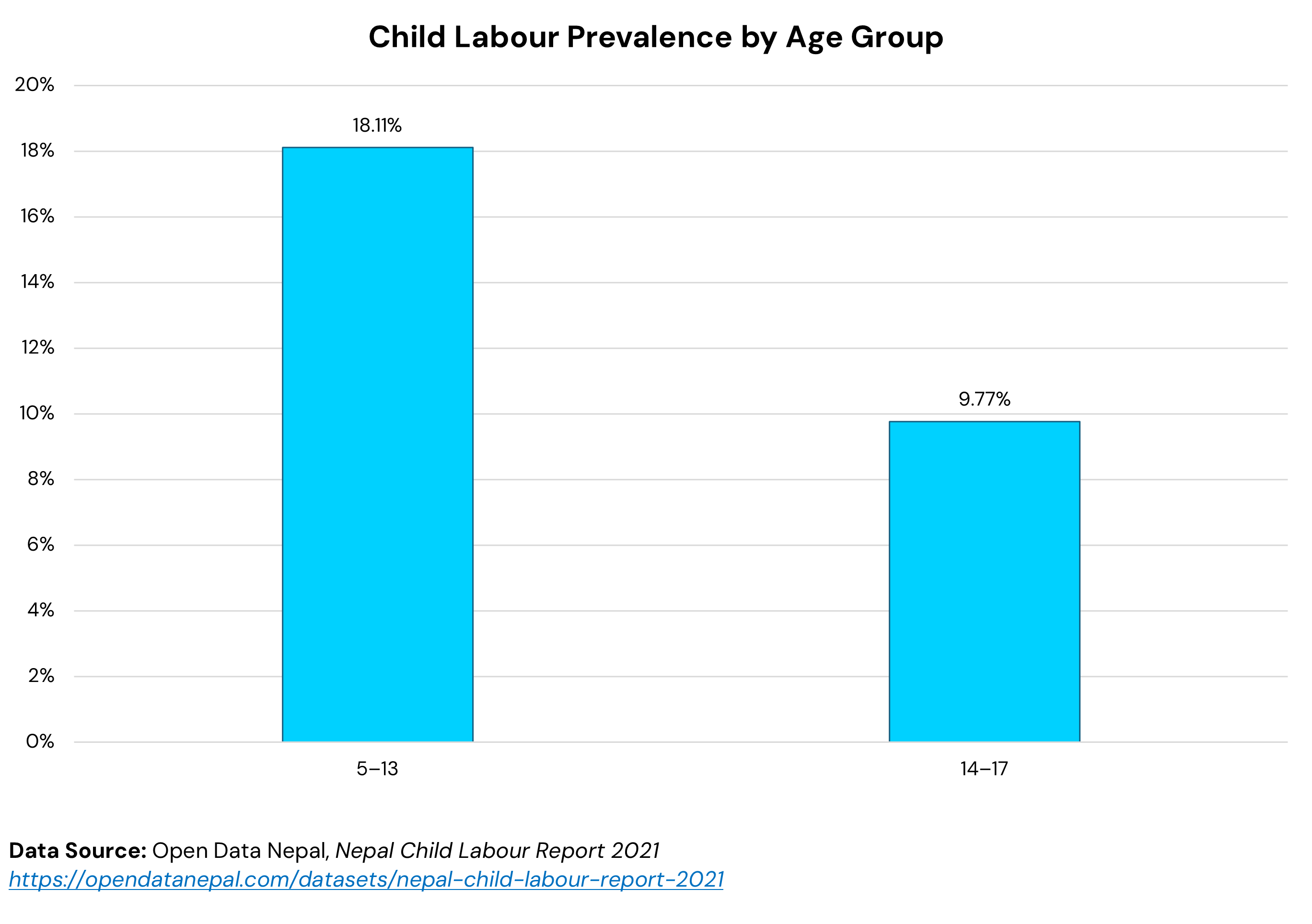
The data reveals a concerning pattern of early workforce participation among Nepal's youngest population. Children aged 5–13 years experience a child labour prevalence rate of 18%, nearly double the 10% rate observed among those aged 14–17 years. This age distribution suggests that many children begin working during their foundational developmental years, often supporting family agricultural activities or household enterprises.
The higher prevalence among younger children indicates systemic challenges in protecting the most vulnerable age groups, particularly in contexts where family economic survival depends on collective labor contributions.
Gender Disparities in Child Labour Participation
Analysis by gender reveals distinct patterns in child labour engagement. Female children demonstrate a 17% participation rate compared to 14% among male children.
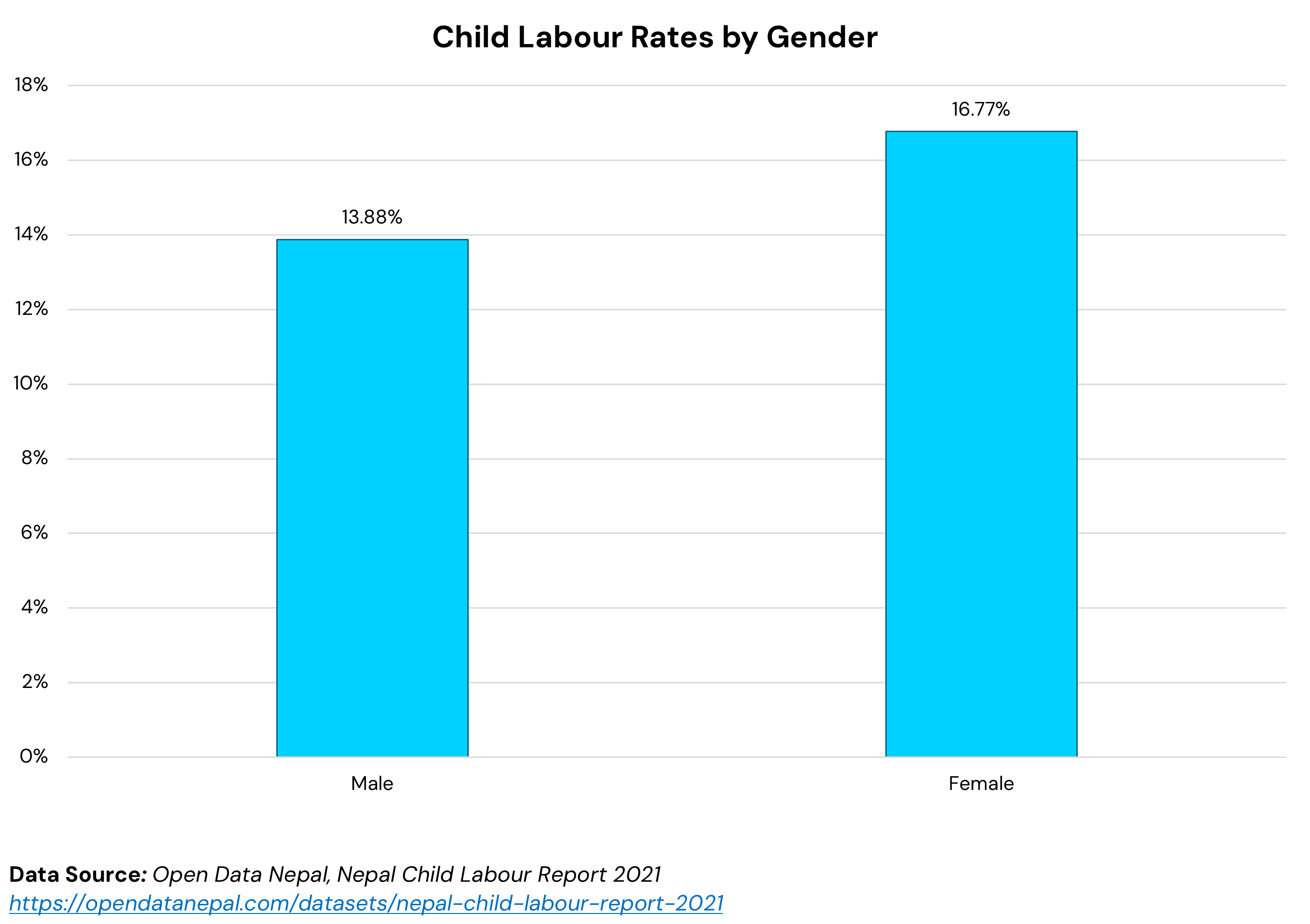
Girls are more likely than boys to be engaged in child labour. This gap reflects the persistent influence of gender norms. In many contexts, boys are more likely to be prioritised for schooling and external opportunities, while girls shoulder a heavier load of both unpaid household work and economic activities.
This means that child labour for girls often has a “double burden” character: they may combine school, domestic responsibilities, and economic work, which can negatively affect their education, health, and future opportunities.
The Rural-Urban Divide
Child labour shows marked geographic concentration, with rural areas recording a 20.4% prevalence rate compared to 12.1% in urban centers. This 8.3-percentage point gap represents one of the most significant disparities in the data.
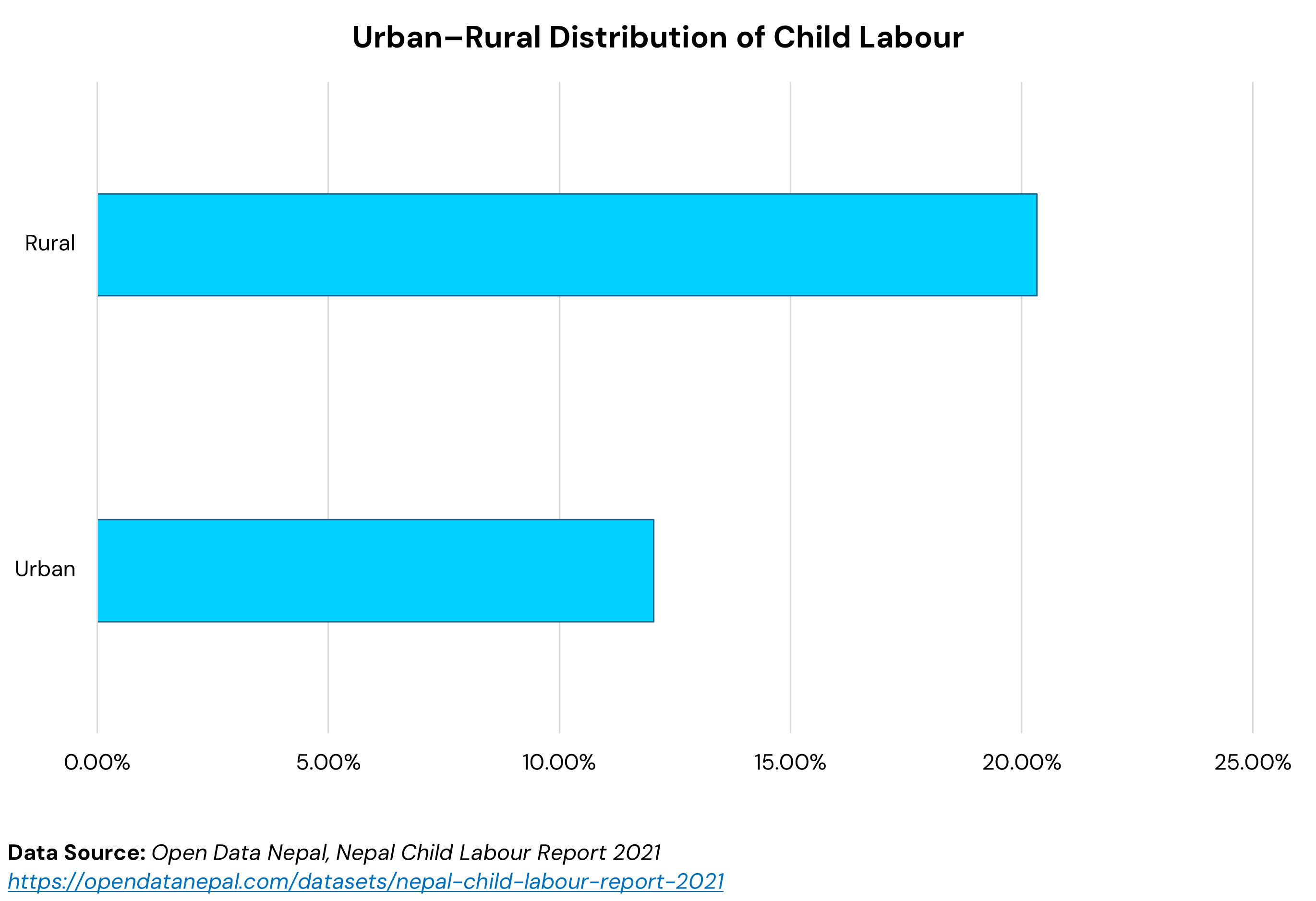
The rural-urban divide correlates with several structural factors:
- Educational Infrastructure: Rural areas face challenges in school accessibility and quality
- Economic Structure: Subsistence farming in rural regions often requires family-wide participation
- Social Services: Urban areas typically offer stronger social protection systems and enforcement mechanisms
Clear Provincial Disparities
Child labour rates vary sharply across provinces, reflecting broader patterns of development, infrastructure, and services.
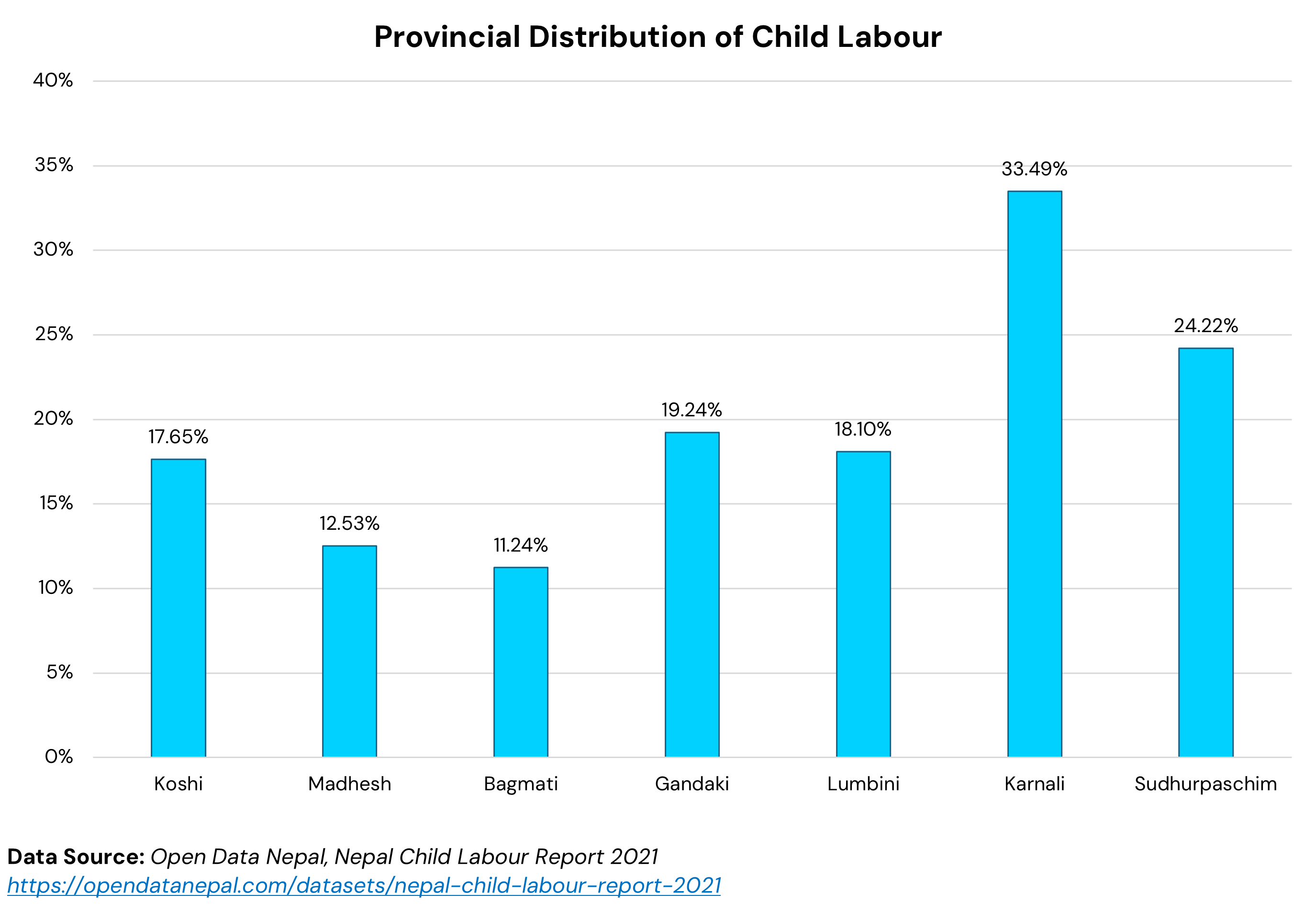
The least developed provinces, particularly Karnali and Sudurpashchim, record the highest child labour rates. These regions are often characterised by:
- Challenging geography and poor infrastructure,
- Pervasive poverty, and
- Limited access to quality education and public services.
On the other hand, Bagmati, which is more urbanised and economically advanced, reports the lowest prevalence. Better connectivity, stronger public services, and more effective enforcement of child labour laws all contribute to this relatively lower rate.
These provincial variations highlight that child labour is not evenly distributed; it is strongly associated with broader patterns of regional inequality.
Agriculture's Dominant Role in Child Labour
The sectoral breakdown reveals an overwhelming concentration of child labour in agriculture:
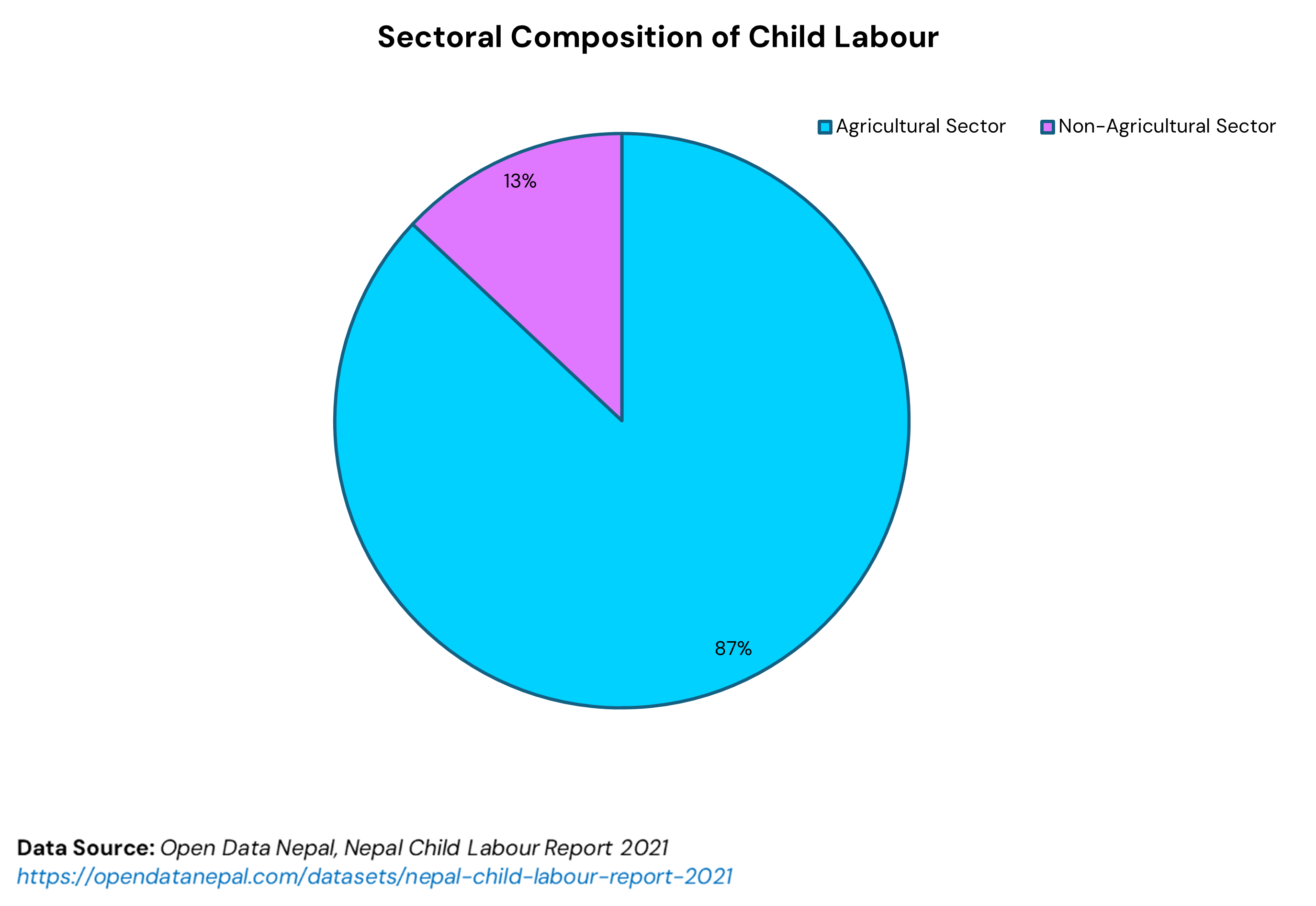
Agriculture accounts for 87% of all child labourers, while only 13% are engaged in non-agricultural sectors. Female children are more heavily represented in agricultural work, whereas male children are more prevalent in non-agricultural sectors, particularly in activities classified as hazardous.
School Attendance and Child Labour
Child labour is notably higher among children who are not attending school. Among children aged 5–17 years, 14.1% of those attending school are engaged in labour, compared to 25.1% of those who are not in school
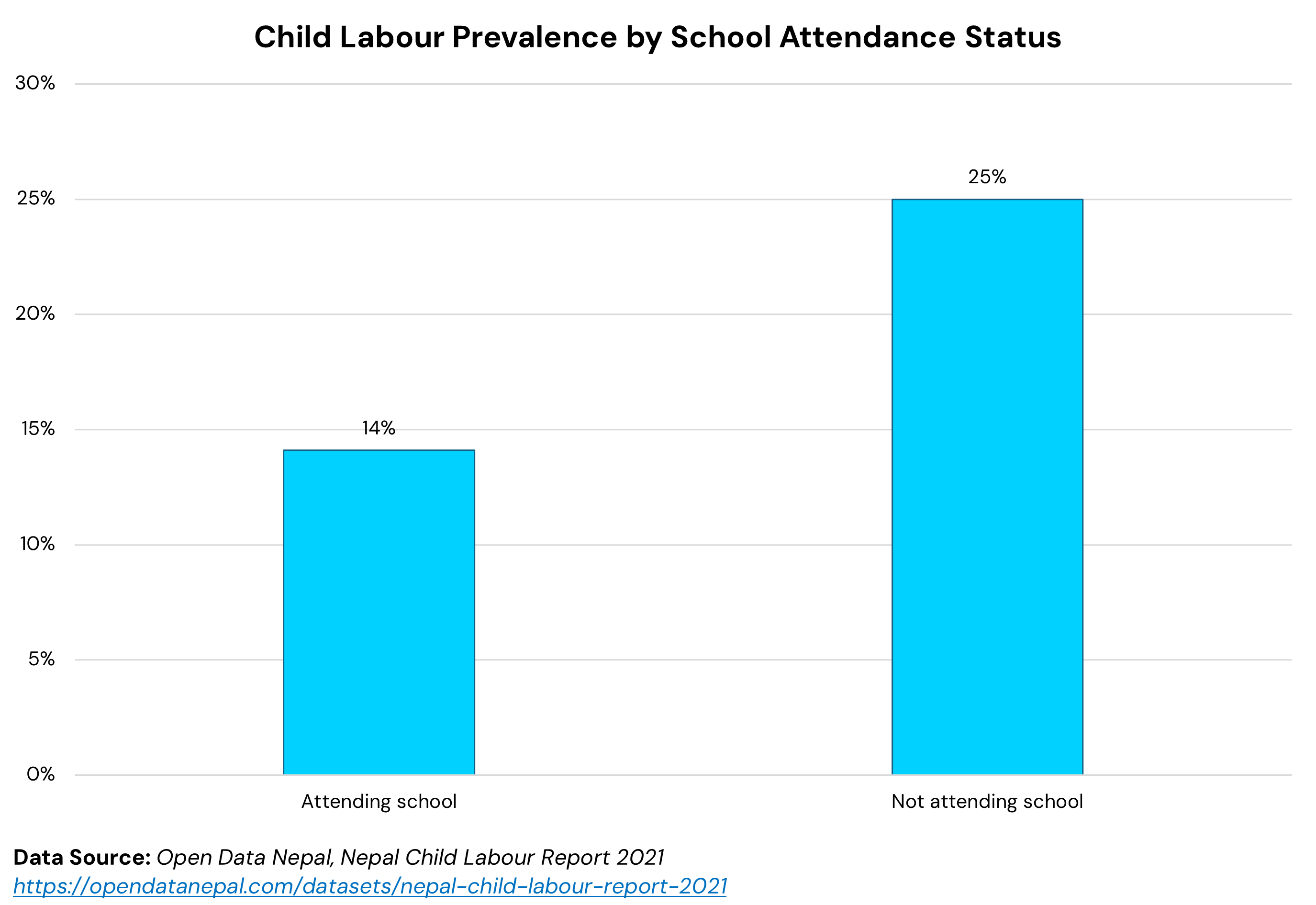
The gap widens with age. Adolescents aged 14–17 years who are not attending school show the highest rates of labour participation. This highlights how school exclusion and child labour can reinforce each other, creating a cycle of limited education and continued vulnerability that may extend into adulthood.
What the Data Tells Us
Taken together, these patterns show that child labour in Nepal is not random or isolated. It is concentrated among younger children, girls, rural households, poorer provinces, agricultural livelihoods, and children who are excluded from schooling.
The data from the Nepal Child Labour Report presents a clear and urgent picture: child labour in Nepal is a multidimensional issue shaped by poverty, regional inequality, gender norms, and unequal access to education. These findings underscore the need for targeted, evidence-based interventions that prioritize keeping children in school, address rural and provincial disparities, strengthen household social protection, and ensure effective enforcement of existing child labour laws. Without addressing these interconnected factors together, the cycle of child labour and vulnerability risks continuing across generations.
About This Story
This data story is based on the Nepal Child Labour Report (2021), which draws on data from the Nepal Labour Force Survey III (2017/18) conducted by the Central Bureau of Statistics (CBS). The analysis focuses on children aged 5–17 years and examines child labour patterns by age, sex, location, province, sector, school attendance, and wages. The aim is to present an evidence-based snapshot of child labour in Nepal to support informed policy discussions and targeted interventions.
